
Is Online Personal Training Good for Autistic and ADHD Adults?
Yes. For many autistic and ADHD adults, online personal training is a better fit than training in person. It lets you control your sensory environment, removes the pressure of being watched, cuts out stressful transitions like travel and changing rooms, and gives you structured support that flexes around your energy and executive function. It isn't right for everyone, though, so here's an honest look at both sides.
I'm Rhiannon, a CIMSPA-registered personal trainer, and I'm autistic and ADHD myself. I once sat in a gym car park with a membership I never used, because the thought of walking through that first door was too much. Now I coach neurodivergent and anxious adults entirely online, and I've seen first-hand why it works for so many people, and where it doesn't.
Why Online Training Can Work Better For Neurodivergent People
You control the sensory environment
Gyms are loud, bright and unpredictable. There are strip lights, clanging weights, music you didn't choose, other people's sweat and aftershave, and equipment that's sticky or cold to the touch. For many autistic and ADHD people, that's exhausting before a single rep.
Training online means you choose everything: the lighting, the noise (or the silence), your clothes, the temperature, and the space and if that’s the gym, thats OK! This leaves your energy for the training itself, not for coping with the room.
There's no audience and no unwritten rules
Being watched while you learn something new is hard for anyone (myself included). For neurodivergent people, when you add in the gym's unwritten rules; how long can I use this machine? Do I ask to share? Is someone staring at me? Am I doing this wrong?
At home, or in a gym without a PT watching your every move, those questions disappear. You can wobble, restart or pause without anyone seeing.
There are fewer transitions
Every transition costs energy: getting ready, travelling, parking, walking in, changing, finding a space, and doing it all in reverse afterwards. For many ADHD and autistic adults, the transitions are the real barrier, not the exercise.
Online training (especially when completed at home) can cut energy, steps and executive function needed to start each session.
You get structure without rigidity
Executive function differences make it harder to plan workouts, sequence exercises and keep routines going without outside help. A good online coach does the planning for you. You open the app, and today's session is there, with video demos for every exercise.
Good coaching also flexes. When your energy crashes, the plan changes to match, rather than you being expected to push through.
You have support between sessions
With in-person training, you usually see your coach once or twice a week. With online coaching, you can message when you're stuck, unsure about an exercise, or struggling to get started. For ADHD brains especially, support at the moment you need it can make the difference between training and not. There are also video demos and written demos provided to suit your own needs.
You train when your energy allows
There are no fixed appointment times to plan your week around. You can train at 7am, 9pm, or whenever your brain and body are ready. Great for those with any Demand Avoidance tendencies!
The Honest Downsides of Online Coaching
Online coaching isn't perfect, and it's not right for everyone. Here's what to know, and how a good coach can help with each.
There's no hands-on form correction
Your coach can't physically adjust your position. Instead, you can send short videos of your exercises and get specific feedback, which many people find less stressful than being corrected in front of others. At Not So Typical Fitness we can also go through form during video check-ins.
It needs a small amount of self-starting
No one is waiting for you at a set time. Reminders, low-decision workout options and regular check-ins can help, but if you rely heavily on a fixed appointment to show up, in-person training may suit you better.
Video calls can be draining
For some autistic or neurodivergent people, video check-ins are harder than talking face to face. Look for a coach who offers text or voice check-ins as well as video, like we do at Not So Typical Fitness.
Some people simply prefer someone in the room
That's completely valid. The best option is the one you'll actually keep doing.
Online or In Person: Which Suits You?
Online trainingmight suit you if…
- gym environments leave you overwhelmed or drained
- being watched or judged makes you anxious
- getting out of the house is the hardest part
- you need flexibility around energy, health conditions or burnout
- you'd rather message than talk in real time
In-person trainingmight suit you better if…
- you need someone physically there to get started
- you learn best through hands-on guidance
- a fixed appointment is what keeps you consistent
- you find screens and video calls difficult
There's no wrong answer. The best option is the one you'll actually keep doing.
What To Look For In An Online coach If You're Neurodivergent
Not all online coaching is built with neurodivergent people in mind. Look for a coach who:
asks about your sensory needs before building your programme
offers different check-in formats, such as video, voice or text
has low-decision options for hard or low-energy days
gives clear, written instructions and video demos for every exercise
understands executive function and doesn't treat missed sessions as a lack of willpower
lets you pause without guilt when life happens
is weight-neutral, focusing on strength and how you feel rather than pushing weight loss
ideally has lived experience, or at least specific training in working with neurodivergent clients
What Online Coaching With Me Looks Like
My online coaching is built around exactly this. You get a personalised strength programme in an app, with video demos for every exercise and easier alternatives for harder days. You choose weekly or fortnightly check-ins by video, voice or text, and you can message me whenever you need to. Full coaching is £199 a month.
If planning a workout is the hardest part for you, the Movement Menu is a lower-decision option at £99 a month. You answer three questions and get one workout.
And if you'd rather try things on your own first, the Sensory-Safe Strength System is an 8-week programme for £27, with a 60-day money-back guarantee.
Frequently Asked Questions
Can you build strength with online personal training?
Yes. Strength comes from following a well-designed programme that gradually gets more challenging, and that works just as well at home or in a gym as it does with a coach beside you. Video demos and form-check feedback help you train safely and progress with confidence.
Do I need gym equipment for online coaching?
No. Many people start at home with minimal equipment, such as a mat, some dumbbells or resistance bands. A good online coach builds your programme around what you have, whether that's a full gym or your living room floor.
What if I find video calls hard?
Look for a coach who offers text or voice check-ins. Many autistic and ADHD adults find written check-ins easier, because they have time to think and don't need to manage eye contact or real-time conversation.
How do online coaches check your form?
You film short clips of your exercises and send them to your coach, who gives specific feedback on what to adjust. Many people find this less stressful than being corrected in person, because no one is watching while you learn.
Is online coaching cheaper than in-person personal training?
Often, yes. Online coaching is usually a monthly fee rather than a price per session, so you get ongoing programming and support for less than regular face-to-face sessions would typically cost. My full online coaching is £199 a month, and the Movement Menu is £99 a month.
What if I'm not ready for coaching yet?
Start with a self-guided programme. The Sensory-Safe Strength System is an 8-week programme designed for nervous, anxious and neurodivergent adults. It costs £27 and comes with a 60-day money-back guarantee.
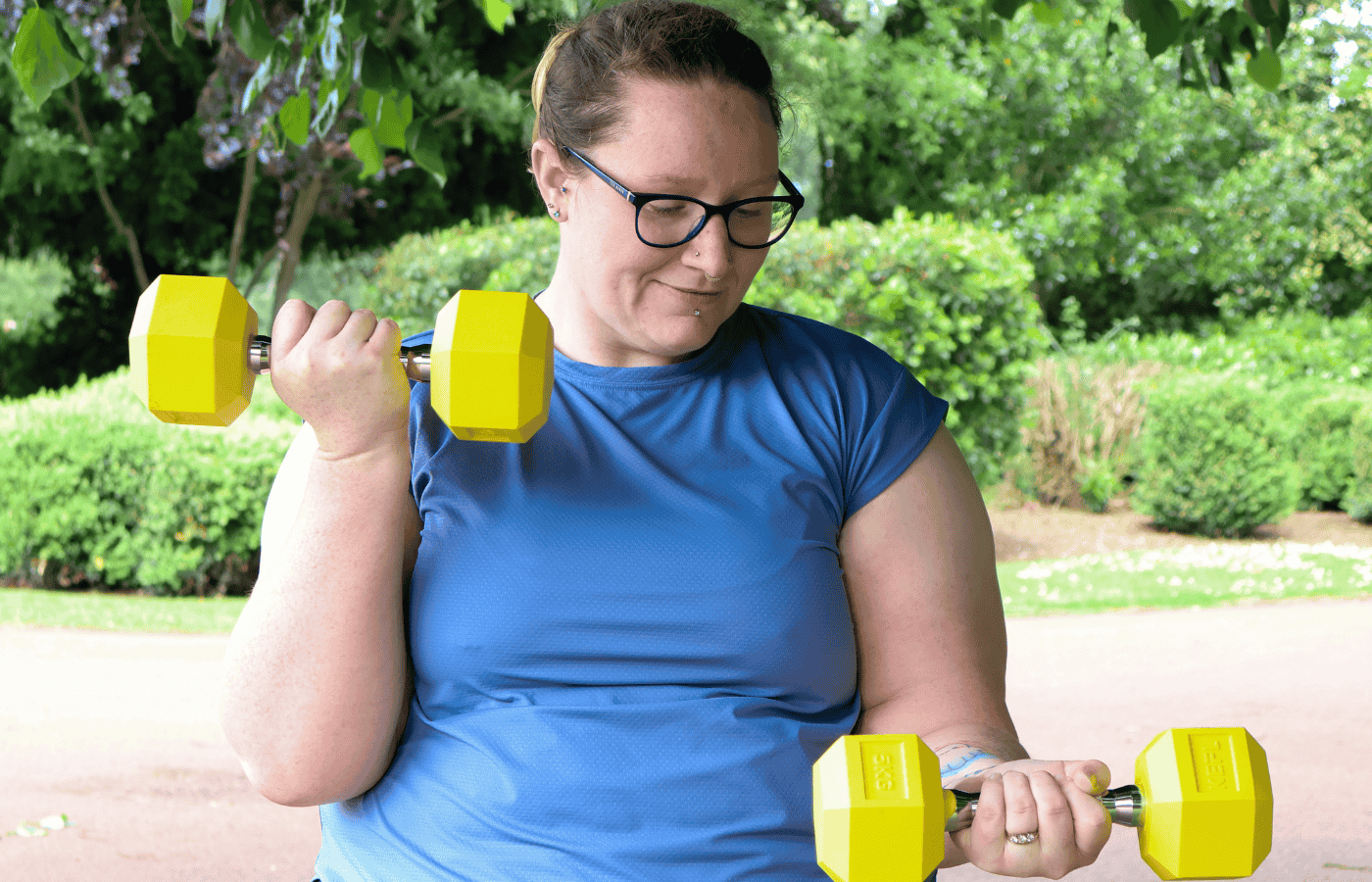
About The Author - Rhiannon Cooper
Rhiannon Cooper is a CIMSPA-registered personal trainer, TEDx speaker and competitive strongwoman, and the founder of Not So Typical Fitness. Autistic and ADHD herself, she coaches neurodivergent and anxious adults online.
