
How to Find a Personal Trainer Who Works with Neurodivergent Adults
Finding a personal trainer is hard enough.
Finding one who actually understands how your brain works? That’s a completely different challenge. Most personal trainers are taught to coach the “average” client.
Someone with consistent motivation. Predictable energy. No sensory sensitivities. No executive dysfunction. No anxiety about walking through the gym doors.
For autistic adults and people with ADHD, that standard approach often does more harm than good. A bad fit doesn’t just waste money, it reinforces the story you may already be telling yourself:
Maybe the gym just isn’t for me.
It is.
You just need the right kind of support.
As an AuDHD personal trainer who has personally navigated gym anxiety, sensory overwhelm, weight stigma, and the chaos that comes with trying to make fitness “fit” a neurodivergent brain, I know how often mainstream fitness advice misses the mark.
Here’s exactly what to look for.
What a genuinely neurodivergent-friendly personal trainer actually does
It's not just about someone being patient or kind, although that helps.
A genuinely neurodivergent-friendly personal trainer will adapt sessions on the day without making you feel guilty for it. Energy, sensory tolerance, and capacity vary. A good coach works with that instead of treating it like a lack of discipline.
They’ll communicate in the way that actually helps you, whether that's a written plan sent the day before, a verbal walkthrough at the start of the session, or simple step-by-step instructions as you go. None of those needs are unreasonable.
They’ll understand masking and fatigue. Someone can show up smiling and still be completely overwhelmed. A trainer who understands neurodivergence knows not to judge by appearances.
They’ll design around sensory barriers, bright lighting, loud music, busy gym floors, unexpected changes. These are genuine barriers, not excuses. A good PT already knows this before you have to explain it.
And they’ll focus on confidence, function, and sustainability, not aesthetics, punishment workouts, or "summer body" pressure. Progress doesn't have to mean shrinking yourself.
How to vet a personal trainer before you contact them
Before you even send an enquiry, their content will tell you a lot.
Look for:
Clear mentions of autism, ADHD, sensory overwhelm, or neurodivergence
Content that feels human; not all “no excuses” and toxic grind culture
An explanation of how they coach, not just a list of qualifications
Resources created specifically for neurodivergent people
Signs they understand accessibility beyond physical disability
There’s a huge difference between:
"I’ve worked with someone with ADHD once."
And:
"I’ve built my entire coaching approach around accessibility."
Questions to ask a personal trainer before you commit
A consultation (even by email) can save you a lot of stress. Ask:
How do you adapt sessions if someone is overwhelmed or experiencing sensory overload?
What happens if I need to change the plan on the day?
Have you worked with autistic or ADHD clients before?
Do you offer written plans, visual guidance, or advance session structure?
How do you communicate between sessions?
What happens if I need to cancel last minute because I’ve hit capacity?
Listen carefully. Vague reassurance isn’t enough.
"I’m flexible" means nothing.
Specific answers like:
"I send session plans in advance and check in at the start to adapt if needed."
That means something.
Red flags that a PT isn't the right fit for neurodivergent clients
Walk away if:
There’s zero mention of neurodivergence anywhere
Every client gets the exact same programme
The entire focus is aesthetics or weight loss
Your questions are brushed off with generic reassurance
They’ve never thought about accessibility in this way and don’t seem interested in learning
That doesn’t make them a bad trainer. It just means they may not be the right trainer for you.
When gym anxiety is the real barrier
Sometimes the problem isn't exercise, it's the environment.
The noise. The unpredictability. The fear of looking stupid. Not knowing what machines do. Feeling like everyone is watching you.
If that sounds familiar, start here:
Download the free Gym Anxiety Toolkit
It’s designed specifically for neurodivergent adults who want practical support, not vague motivation.
Why online training can work better for many neurodivergent adults
For many neurodivergent adults, online coaching is the more sustainable option, and sometimes the only one that actually works.
In-person sessions add layers of demand that have nothing to do with exercise: managing conversation, processing instructions in real time, regulating sensory input, masking, and coping with being perceived. That's a significant cognitive load on top of the training itself.
Online or self-paced programmes remove much of that pressure. You move in your own space, at your own pace, without the performance element. For some people, that's where consistent progress finally becomes possible.
Ready to start? Here's what I built for you
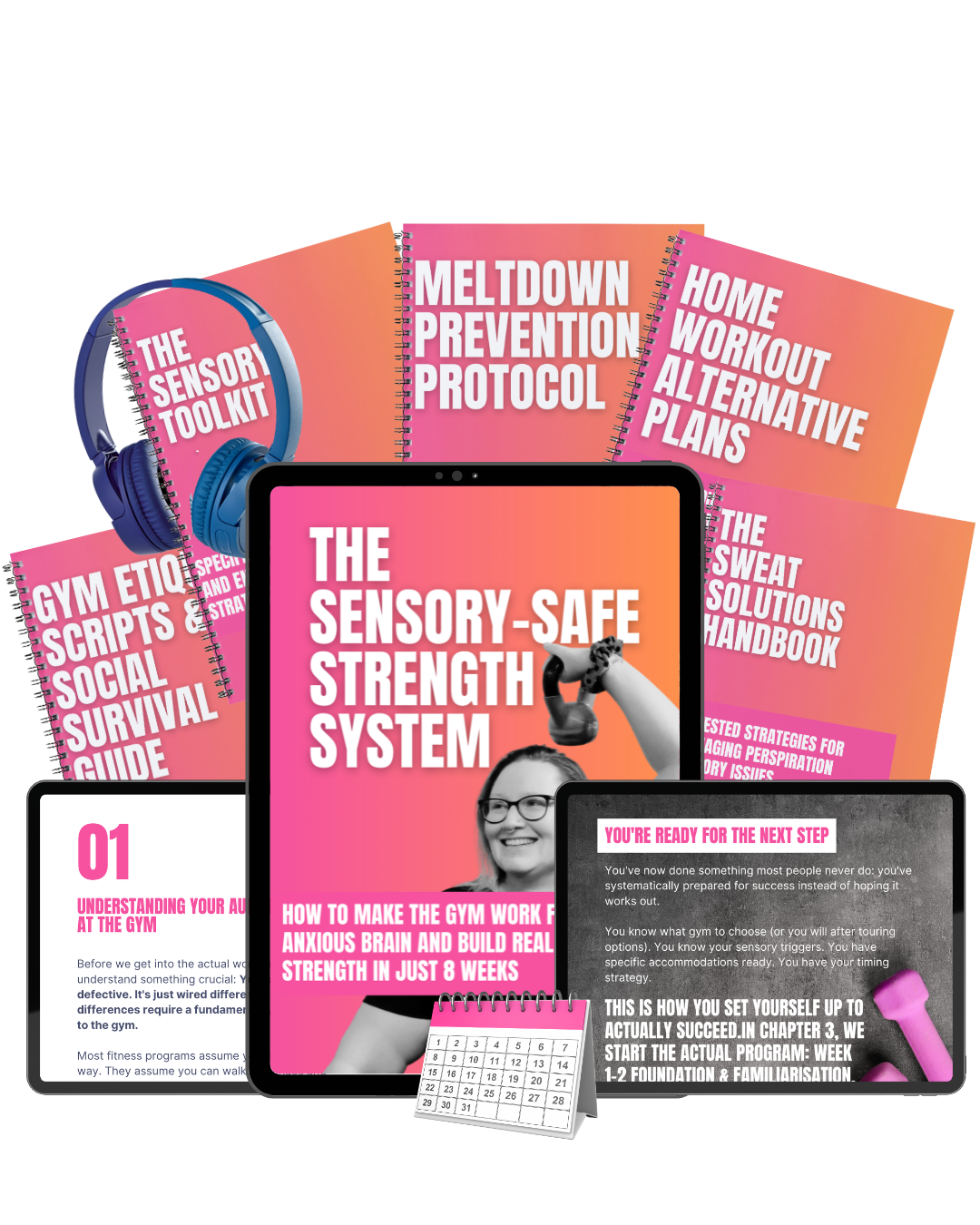
If you're ready for something more guided, I created the Sensory-Safe Strength System specifically for this.
It's an 8-week self-paced programme designed for autistic and ADHD adults who want structure without overwhelm. No toxic gym culture, no all-or-nothing pressure, no generic plans pretending everyone works the same way.
It includes:
8 weeks of structured workouts designed for neurodivergent brains
Built-in flexibility for low-capacity days; because those days are real
A sensory checklist to help you navigate gym environments with confidence
Practical tools for overwhelm, so you always know what to do when things feel like too much
Bonus resources to support you beyond the programme itself
Frequently asked questions
What qualifications should a neurodivergent-friendly personal trainer have? There's no single qualification that guarantees neurodivergent awareness. What matters more is lived experience, active learning, accessibility awareness, and the ability to explain clearly how they adapt their coaching.
Can autistic adults or people with ADHD work with a personal trainer? Absolutely. The barrier is rarely your neurodivergence. The barrier is finding support that actually works with your brain instead of against it.
Is online personal training a good option for neurodivergent adults? For many neurodivergent adults, online coaching removes the social and sensory pressures that make in-person sessions harder than they need to be, making it a more sustainable and often more effective option. See the section above for a fuller explanation.
What is the Sensory-Safe Strength System? The Sensory-Safe Strength System is an 8-week digital fitness programme created by Rhiannon Cooper, a CIMSPA-registered personal trainer specialising in neurodivergent adults and gym anxiety. It was built specifically for autistic and ADHD adults from the ground up, not adapted from a generic programme.
