
How Much Does a Personal Trainer Cost in the UK? In-Person vs Online Prices (2026)
By Rhiannon Cooper – CIMSPA-Registered Neurodivergent Personal Trainer
Quick answer: In the UK, a personal training session in a gym typically costs £30–£50 per hour, or £25–£40 per hour if you book a block of sessions. Online personal training usually costs £100–£250 per month for personalised coaching with regular check-ins. My 1:1 online coaching is £199 per month, and every option starts with a free 20–30 minute discovery call.
If you're comparing personal trainers and can't work out what's normal, what's overpriced, or what you actually get for your money, this guide breaks it down. It also covers what makes neurodivergent-friendly coaching different, and why that matters even if you're not neurodivergent.
In-Person Personal Trainer Prices in the UK
| Type of session | Typical UK price | What's included |
|---|---|---|
| 1:1 session (pay as you go) | £30–£50 per hour | Personalised coaching and form checks |
| Block booking (5–10 sessions) | £25–£40 per hour | A discounted rate for committing up front |
| Buddy or small group training | £20–£30 per person | Shared cost, with less individual attention |
Why prices vary so much: At big commercial gyms like JD Gyms, PureGym and The Gym Group, personal trainers are usually self-employed. They pay the gym rent and set their own rates, so prices depend on the individual trainer rather than the gym. Session length, experience, qualifications and specialist knowledge all affect the price too.
Splitting sessions with a friend: Most trainers offer buddy sessions. You share one session and usually pay £20–£30 each, which makes in-person training more affordable but less individual.
Online Personal Trainer Prices in the UK
| Type of support | Typical UK price | What's included |
|---|---|---|
| Pre-built programme | £10–£60 one-off | A fixed plan with no personal feedback |
| App or exercise library subscription | £5–£30 per month | Workouts and demos you follow on your own |
| Personalised online coaching | £100–£250 per month | A tailored plan, regular check-ins, form feedback, messaging support |
| Premium coaching | £250+ per month | Everything above plus frequent video calls |
What affects the price of online coaching:
How often you get feedback (weekly check-ins or monthly reviews)
Level of contact (messaging only, or regular video calls)
The coach's qualifications and experience, such as CIMSPA registration
Specialist knowledge, such as neurodivergent support, rehabilitation or sport performance
A cheaper plan isn't automatically worse value, and an expensive one isn't automatically better. What matters is whether the support actually fits how you live and learn.
How My Pricing Works (Transparency First)
I offer different levels of support depending on what you need right now:
| Option | Price | Ideal for |
|---|---|---|
| Sensory-Safe Strength System | £27 one-off | Trying my approach on your own first |
| The Movement Library | £9 | Clear exercise guidance you can refer back to |
| The Movement Menu | £99 per month | Ongoing structure without full 1:1 coaching |
| 1:1 Online Coaching Full 1:1 support | £199 per month | Fully personalised coaching with regular check-ins |
Every coaching enquiry starts with a free 20–30 minute discovery call. We talk about your comfort levels, sensory needs and goals before you spend a penny.
What Makes Neurodivergent-Friendly Coaching Different
If you're autistic, have ADHD, live with anxiety, or just need a coach who understands how real life works, a flexible and personalised approach matters far more than "8-week shred" promises.
Sensory-friendly planning
Train where you feel comfortable: at home, outdoors, or at a gym at quieter times
A clear, predictable structure with no surprise workouts
Practical strategies for adapting noisy or busy environments
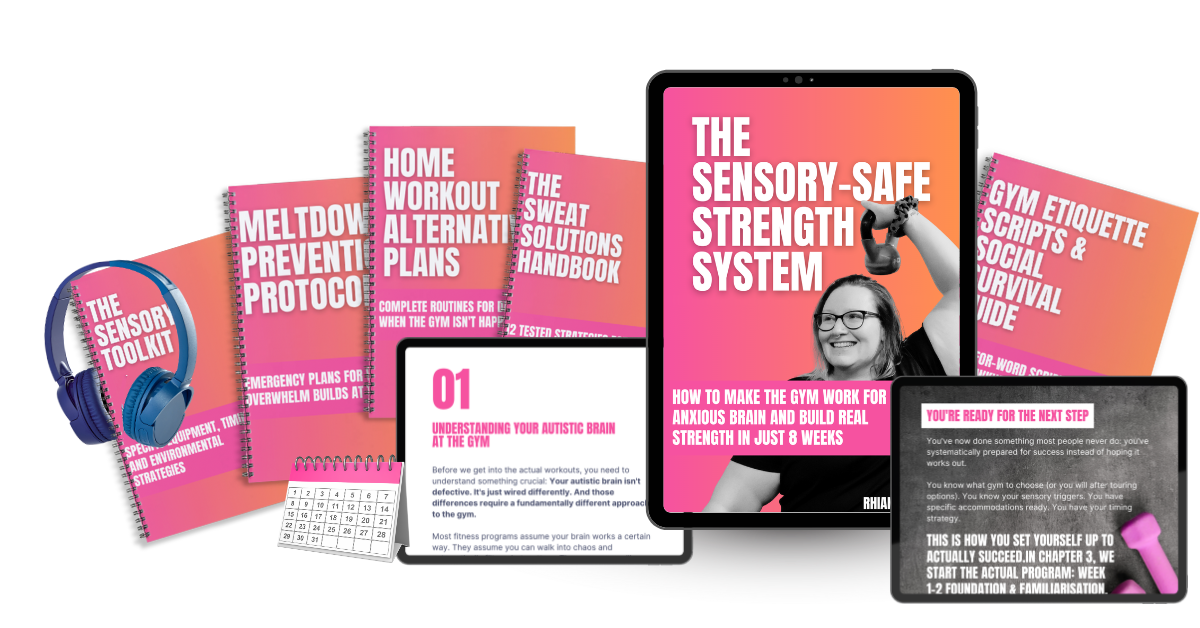
If you want to see what that looks like in practice, the Sensory-Safe Strength System breaks it down step by step.
Visual and written supports
Visual workout cards you can use on your own
Written exercise descriptions, so you don't have to remember verbal instructions
Clear progress tracking
Flexible scheduling
Built around energy crashes and burnout cycles
An understanding of executive dysfunction
No guilt or pressure around missed sessions
Real communication
A direct style, with no hints or subtext
No toxic positivity and no "just push through it"
No pretending life doesn't get messy
This isn't about forcing motivation. It's about building systems that actually fit your brain.
Is Online Personal Training Worth It?
For many people, especially those who find gyms overwhelming, online coaching is the better option rather than the budget one. You train in a space you control. You can re-watch and re-read instructions as often as you need. Nobody is watching you learn. You still get expert programming and feedback, without having to perform in front of anyone.
It's less suited to you if you need hands-on physical support, for example immediately after an injury. In that case, talk to a physio first.
What You Won't Get (And Why That's a Good Thing)
❌ No "beast mode" motivation or toxic positivity
❌ No complicated meal plans you'll never follow
❌ No pressure to post progress selfies or track every macro
❌ No judgement about missed sessions or life getting in the way
If you've tried personal training before and felt like you were constantly failing, it wasn't you. It was the approach.
How to Choose the Right Personal Trainer
Ask these five questions before you book anyone, in person or online:
Do they understand your lifestyle and learning needs? Ask how they adapt coaching for different learning styles and communication preferences.
Are they transparent about pricing? You should know exactly what you're paying and what's included. Hidden fees, upselling and guilt-driven "commitment talk" are red flags.
Do you feel safe and supported? If you feel you need to mask or perform, keep looking.
What are their qualifications? Look for CIMSPA registration (the UK industry standard) and relevant specialist training.
Can you talk before committing? Good coaches offer a free discovery call. Pressure to sign up on the spot is a warning sign.
Inclusive Fitness Shouldn't Cost Extra
Accessibility and understanding are part of the service, not a premium add-on. When you work with me, you're investing in:
✅ Emotional safety: a coach who understands anxiety, sensory overwhelm and burnout
✅ Clarity: clear instructions, visual supports and predictable structure
✅ Consistency without burnout: habits that actually fit your life
Your Next Step: Book a Free Discovery Call
You don't need to be "fit enough" or "motivated enough". You just need a plan that fits you.
Book your free call. We'll spend 20–30 minutes on your goals, what's held you back, and what you actually need.
Choose your approach. I'll recommend the best option for your budget, schedule and comfort level.
Start when you're ready. No pressure, no upselling, no guilt trips.
Book your free discovery call →
Not ready yet? Start with the Sensory-Safe Strength System for £27.
Real Results from Real People
"I can now walk into the gym without having a panic attack. Three months ago, I couldn't even drive past without feeling sick. Rhi's approach has actually worked for me and it makes sense!" - Maxine, 32
"I've tried four different personal trainers. This is the first time someone understood why I couldn't just 'push through' sensory overload. I'm deadlifting 60kg now and I’m enjoying training." - Ollie, 32
"The visual workout cards changed everything. I don't have to remember sequences or ask questions mid-session. I can just focus on moving." - Claire, 35
Frequently Asked Questions
How much does a personal trainer cost in the UK?
In-person sessions typically cost £30–£50 per hour, or £25–£40 per hour in a block booking. Online personal training usually costs £100–£250 per month for personalised coaching.
How much is a PT session?
A single personal training session in a UK gym typically costs £30–£50 per hour. Block bookings usually bring that down to £25–£40 per session.
Why do personal trainers at the same gym charge different prices?
At most commercial gyms, personal trainers are self-employed and set their own rates, so the price depends on the trainer's experience, qualifications and specialism rather than the gym itself.
Is online personal training cheaper than in-person?
Usually, per month. Weekly in-person sessions can cost £120–£200 or more a month, while personalised online coaching typically costs £100–£250 a month and includes support between sessions.
How much does your online coaching cost?
My 1:1 online coaching is £199 per month. I also offer lower-cost options, including the Sensory-Safe Strength System (£27) and The Movement Menu (£99 per month).
Are your services only for autistic or ADHD clients?
Not at all. My coaching is open to everyone, but it's designed with neurodivergent people in mind. That means clearer communication, flexible structure and no pressure. Many neurotypical clients prefer it too, because it's less intimidating and more sustainable.
Do I need a gym membership?
No. I can build your plan around home workouts, outdoor training or a gym, whichever you feel most comfortable with.
I've tried personal training before and quit after two weeks. Will this be different?
If you quit because you felt overwhelmed, judged, or like the plan didn't fit your real life, then yes. My coaching is built around flexibility, clear communication and your actual energy levels, not an idealised schedule.
Can I talk to you before committing?
Yes. Every coaching option starts with a free 20–30 minute discovery call, with no obligation to sign up.
Do you work with clients across the UK?
Yes. All my coaching is online, so I work with clients anywhere in the UK.
What qualifications do you have?
I'm CIMSPA-registered, with specialist training in neurodivergent fitness, sensory-aware coaching and mental health in fitness. I'm also autistic and have ADHD, which gives me lived experience of the barriers neurodivergent people face in traditional fitness spaces.
