
What Is Gymtimidation & How Do You Overcome It?
Gymtimidation is the fear or anxiety of going to the gym because you worry about being judged, looking out of place, or not knowing what to do. It's common among beginners, people returning after a break, and neurodivergent people. You can overcome it with preparation, quieter visits, small wins and the right support.
Ever Felt Nervous About Going to the Gym?
If you've ever hesitated at the gym entrance, wondering if you truly belong, you're not alone. I've been there too. I've sat in the car park, unable to go in.
Whether you're brand new to fitness, returning after a break, or switching to a new gym, it can feel intimidating. You walk in and it's like stepping onto a stage where everyone seems to know what they're doing except you. The hum of treadmills, the clank of weights and the maze of unfamiliar equipment can easily become overwhelming.
There's a name for this: gymtimidation. And the good news? You can absolutely overcome it, and I'll show you how.
Prefer to listen? Check out this podcast episode all about gym anxiety and how to go even when it feels scary.
What Is Gymtimidation?
Gymtimidation is the fear of going to the gym and feeling judged, out of place, or unsure of what to do. It affects beginners and experienced gym-goers alike.
Common gymtimidation thoughts:
- "Everyone's staring at me."
- "I don't know how to use anything."
- "I don't look fit enough to be here."
- "People will think I don't belong."
I've had those thoughts too. Most of us have. But here's the truth: most people are too focused on their own workouts to pay attention to anyone else. And even if someone glances your way, that doesn't mean they're judging you. They might be just as anxious as you are.
What Triggers Gymtimidation?
Gymtimidation isn't "just in your head." It's a real barrier with specific triggers.
Environmental triggers:
- Crowds and noise overwhelming your senses
- Not understanding equipment or how to adjust it
- Not knowing where to go or what to do first
Social triggers:
- Unwritten rules nobody explains (gym etiquette can be confusing!)
- Feeling watched (real or perceived)
- Fear of asking "stupid questions"
- Comparing yourself to others who seem confident
Practical triggers:
- Uncertainty about what to wear or bring
- Not knowing when the gym is quietest
- Confusion about what happens in an induction
- Unclear expectations for how often beginners should go
Why Confidence Can Vanish in the Gym
The fitness industry doesn't always make it easy. Social media is filled with unrealistic bodies and intense workouts. There's a lack of beginner-friendly education. And most gyms assume you already know the rules.
For neurodivergent people like me, gymtimidation can be even more intense. Sensory overload, unclear expectations and unspoken rules all add up to one thing: "This isn't for me."
But that's not true. The gym can be for you. It just needs to feel more accessible, and that starts with building confidence step by step.
If your anxiety goes beyond the gym itself, my complete guide to overcoming gym anxiety goes deeper into the three core fears.
How to Overcome Gymtimidation
Here are simple, practical ways to make your gym visits less stressful and more empowering.
1. Go With a Plan
Having a plan reduces uncertainty. Write out a few exercises you want to try before you go. Start with things you already know, like walking on the treadmill, using machines with diagrams, or bodyweight squats. If the equipment is new to you, Gym Basics for Beginners explains it in plain language.
2. Choose Quiet Times
Crowds increase anxiety. Try visiting during quieter times, like mid-mornings, early afternoons, late evenings or very early mornings. Staff can often tell you when the gym is least busy if you ask, or you can read my guide to finding quiet gym times.
3. Start With Small Wins
You don't need to dive into a full workout right away. Just going in, having a look around, or spending 10 minutes on the treadmill is still a win. Small wins build gym confidence far more reliably than big leaps.
4. Use Headphones (Even Without Sound)
Music or podcasts can help you stay focused and block out distractions. Even wearing headphones without playing anything can act as a sensory buffer if the environment feels overwhelming.
5. Learn Basic Gym Etiquette
A lot of gym anxiety comes from not knowing the "rules." A few to keep in mind:
- Wipe down equipment after use
- Re-rack weights when you're done
- Don't hog machines during peak times
- Be aware of your space and others'
Knowing this ahead of time makes walking in feel far less daunting. My gym etiquette guide covers the rest.
6. Remind Yourself You Belong
This is the most important one. You belong in the gym. You don't have to "look fit" or "know what you're doing" to have a right to be there. Everyone started somewhere, even the people lifting the heaviest weights.
How to Go to the Gym Alone
Going to the gym alone gets easier when you remove as many unknowns as possible before you arrive. Decide exactly what you'll do, pick a quiet time, and give yourself permission to leave whenever you need to.
A few things that help:
- Write your session down, in order, so you never have to decide on the spot
- Go at a quiet time for your first few visits
- Keep your first visit short: 10 to 15 minutes is enough
- Wear headphones as a sensory and social buffer
- Know where the toilets, water and exit are before you start
- Remember that asking staff for help is part of their job
Most people at the gym are training alone too. You won't look out of place.
For Neurodivergent Gym-Goers (Like Me)
If you're autistic, have ADHD, or experience sensory overwhelm, gymtimidation can be more intense. That doesn't mean you're not capable. It just means you might need extra strategies:
- Scope the gym in advance using online photos or video guides
- Ask for your induction at a quiet time of day
- Break your visit into tiny steps (first visit: walk in and walk out)
- Use visual checklists or routines
- Ask staff where things are if signage is unclear. It's okay to ask more than once.
Want a head start? Download the gym anxiety toolkit.
How I Help You Beat Gymtimidation
If you'd rather not do this alone, that's what I'm here for. I'm an autistic and ADHD personal trainer, and I coach neurodivergent and anxious adults online.
You don't have to be "ready." You don't need to lose weight, get fit or understand gym equipment before working with me. Show up as you are: messy bun, sensory overload, nervous and unsure. We start exactly where you're at.
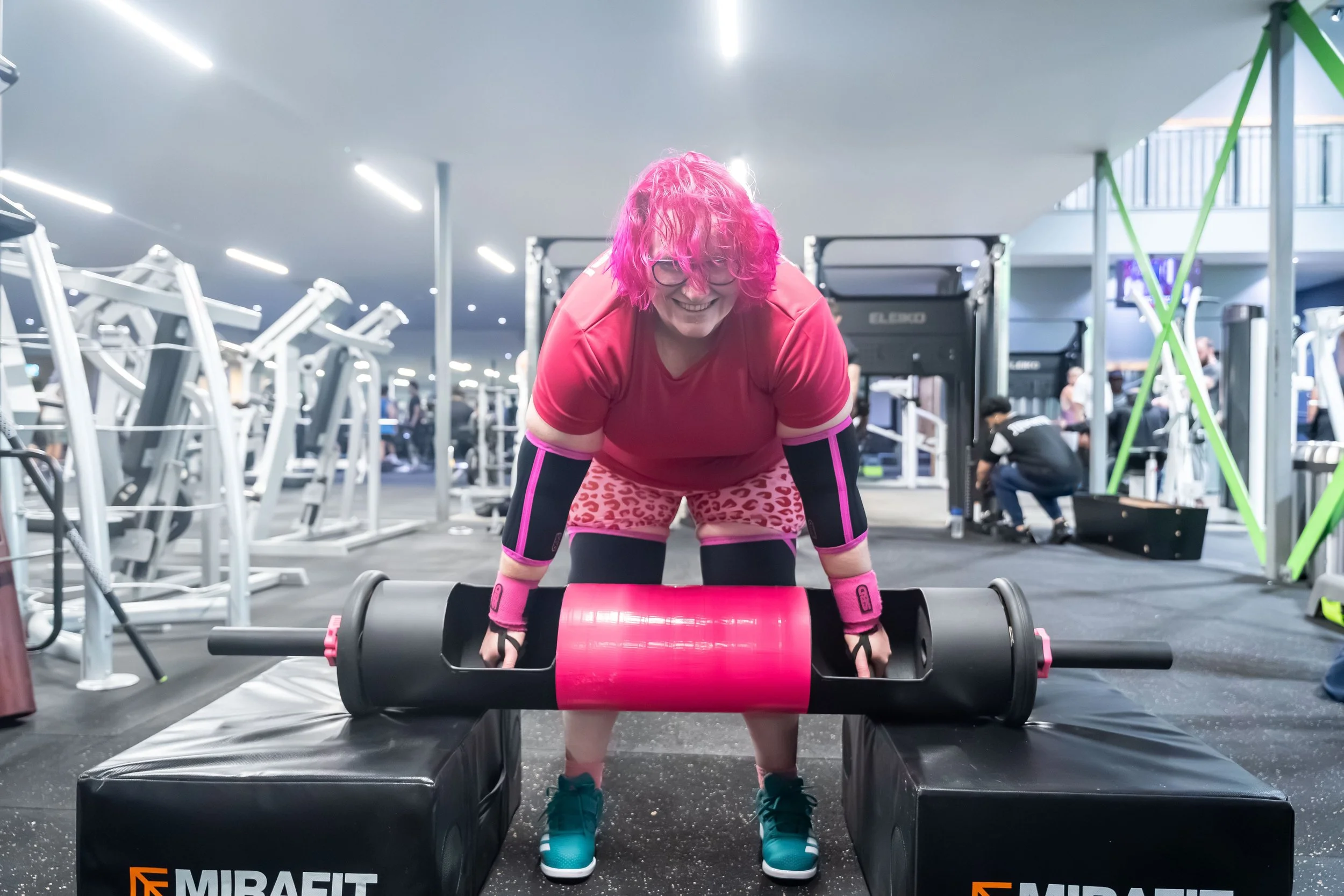
You don't have to face the gym alone, or at all.
With online coaching you can build strength and confidence wherever you feel safest: at home, outdoors, or at the gym when you're ready. You get a personalised programme in an app, with video demos for every exercise and easier alternatives for harder days. So when you do walk into a gym, you already know what you're doing.
Your brain is built in, not worked around. Whether that's visual cues, structured routines, or a gentler session on a high-sensory day, your training is built around how your brain actually works. You don't have to "tough it out."
You're never on your own. Message me when you're stuck, mid-session or not, for questions, form checks and tweaks. No question is too small.
Start Learning
Not ready to commit yet? Educate yourself first.
Get a System to Follow
The Sensory-Safe Strength System: know exactly what to do when you walk into the gym.
Perfect if you:
- Need structure to reduce decision fatigue
- Want sensory accommodations built in
- Struggle with executive dysfunction
- Don't want to figure things out alone
Includes:
- 8 weeks of zero-decision workouts
- Social scripts for gym interactions
- Sensory management strategies
- Routine architecture that sticks
£27 one-off · instant access · 60-day guarantee
Get the SystemLow-Decision Workouts
The Movement Menu: for days when planning feels impossible. Answer 3 questions, get 1 workout.
Perfect if you:
- Want structure without a fixed plan
- Have energy that changes day to day
- Train at home, at the gym, or a mix of both
Includes:
- 10, 20 and 30-minute menus matched to your energy, location and equipment
- Video demos for every workout in the app
- Direct messaging with me for questions and modifications
£99 per month · month-to-month
Find Out MoreFull Online Coaching
Online coaching: a bespoke programme and a coach in your corner, adjusting everything around your energy and progress.
Perfect if you:
- Feel too anxious to go to the gym alone
- Want explicit instruction instead of "figuring it out"
- Need support with executive function and routine-building
- Want someone to message when you're stuck
Includes:
- A personalised programme built for your brain, goals, equipment and space
- An app with video demos, plus easier alternatives for harder days
- Weekly or fortnightly check-ins by video, voice or text
- Direct messaging for questions, form checks and tweaks
£199 per month · month-to-month
Book a Free Discovery CallMonthly options can be paused or cancelled with 2 weeks' notice. No penalties, no guilt.
Not Sure Which Option?
Send me a message saying "I'm scared but I want to try." That's all you need to say. I'll help you find the right first step based on your anxiety level, your budget, your energy and what feels manageable right now. You don't need to be fearless. You just need someone who gets it.
Frequently Asked Questions
What is gymtimidation?
Gymtimidation is the fear or anxiety of going to the gym because you worry about being judged, looking out of place, or not knowing what to do. It's common among beginners, people returning after a break, and neurodivergent people who find gyms overwhelming.
How do I overcome gymtimidation?
Start by removing unknowns. Go with a written plan, visit at quiet times, learn basic gym etiquette, and celebrate small wins like walking in or staying for 10 minutes. Headphones can act as a sensory buffer. If you need more support, a personal trainer who understands anxiety can help.
How can I go to the gym alone without feeling anxious?
Decide exactly what you'll do before you arrive, go at a quiet time, and keep your first visits short. Wear headphones, learn where everything is, and give yourself permission to leave whenever you need to. Most people at the gym are training alone too.
Is gymtimidation the same as gym anxiety?
They overlap. Gymtimidation describes feeling intimidated by the gym environment and the people in it. Gym anxiety is a broader term that can include worry before, during and after training. Many people experience both, and the same strategies help with each.
Are there personal training options for beginners who feel intimidated at the gym?
Yes. I offer online coaching for neurodivergent and anxious adults, so you can build strength at home, outdoors or at the gym when you're ready. It includes a personalised programme, video demos, flexible check-ins and messaging support, from £199 a month.
What Others Say About Overcoming Gymtimidation
"I used to sit in my car for 20 minutes trying to convince myself to go in. Rhiannon's approach made me feel like I wasn't broken for feeling that way." Katie
"This morning I walked into the gym and did a workout for the first time ever, and it's thanks to you." Community member
"As an autistic woman, gyms have always felt like sensory hell. Rhiannon actually understands that and doesn't tell me to 'just deal with it.'" Maxine
About Me
I'm Rhiannon Cooper, a CIMSPA-registered personal trainer, TEDx speaker and competitive strongwoman, and I'm late-diagnosed autistic and ADHD. My work has been featured in The Guardian, FitPro and ITV.
I've been the person sitting in the gym car park, unable to go in. So I built Not So Typical Fitness for people who feel like gyms weren't made for them.
Because they weren't. But that doesn't mean you don't belong there.