
What Are Reps in Exercise? Reps & Sets Explained
A rep, short for repetition, is one complete movement of an exercise. One squat, one bicep curl, one push-up. That's one rep.
A set is a group of reps done back to back without stopping. Do 10 squats in a row and that's one set of 10 reps. Rest, then do it again twice more, and you've done 3 sets of 10 reps; 30 squats total.
That's it. Everything else in strength training builds on those two things.
Why Reps and Sets Matter
Reps and sets give your workout structure. Without them, you're just moving around hoping something works. With them, you can:
Build strength or endurance deliberately
Track progress over time
Know when to push harder and when to rest
Follow any programme without confusion
For neurodivergent gym-goers, having a clear rep and set target before you walk in removes one of the biggest sources of decision fatigue. You don't have to figure it out on the spot.
How Many Reps and Sets Should You Do?
It depends on your goal:
For strength: 4–6 reps per set, heavier weight, 3–5 sets
For muscle growth: 8–12 reps per set, moderate weight, 3–4 sets
For endurance: 12–20 reps per set, lighter weight, 2–3 sets
If you're just starting out, 8–12 reps for 2–3 sets is the sweet spot. It builds confidence, teaches you the movements, and gives your body time to adapt without burning out.
Don't stress about picking the perfect weight. Start light. If you can complete all your reps with good form and it feels manageable, you've got it right. You can always increase from there.
How Long Should You Rest Between Sets?
Rest is part of the workout, not a sign you're slacking!
30–60 seconds for endurance-focused training
60–90 seconds for muscle growth
2–3 minutes for strength work with heavier weights
If you need longer, take it. For ADHD brains especially, using a timer for rest periods helps as it removes the guesswork and stops you either rushing back too soon or losing track of time entirely.
When to Increase Your Reps or Weight
Progressive overload is the principle behind getting stronger; you gradually increase the challenge over time. In practice this means:
If you can complete all your reps with good form and it feels easy, add a rep or two next session
Once you're consistently hitting the top of your rep range (e.g. 12 reps when your target was 8–12), increase the weight slightly
Never increase reps and weight at the same time
Small, consistent increases beat big jumps every time, especially for anxious or autistic gym-goers who need predictability in their training.
Neurodivergent-Friendly Tips for Tracking Reps and Sets
Use a visual tracker. Write your reps and sets down before you start; either in a notebook or a phone app. Ticking off each set as you go removes the mental load of keeping count in your head.
Set a timer for rest periods. 60 seconds goes faster than you think. A timer keeps you on track without having to watch the clock.
Pick a repeatable structure. The same exercises, same sets, same reps each session for 4–6 weeks before changing anything. Predictability reduces overwhelm and makes it easier to notice progress.
Count out loud or use your fingers. Whatever helps you keep track without losing it mid-set. There's no wrong method.
What to Do Next
Once reps and sets click, the next thing to sort is walking into the gym itself. If that part feels like the real hurdle, my Beginner's Complete Gym Guide covers everything you need to know before your first session: https://www.notsotypicalfitness.co.uk/blog/what-you-need-to-know
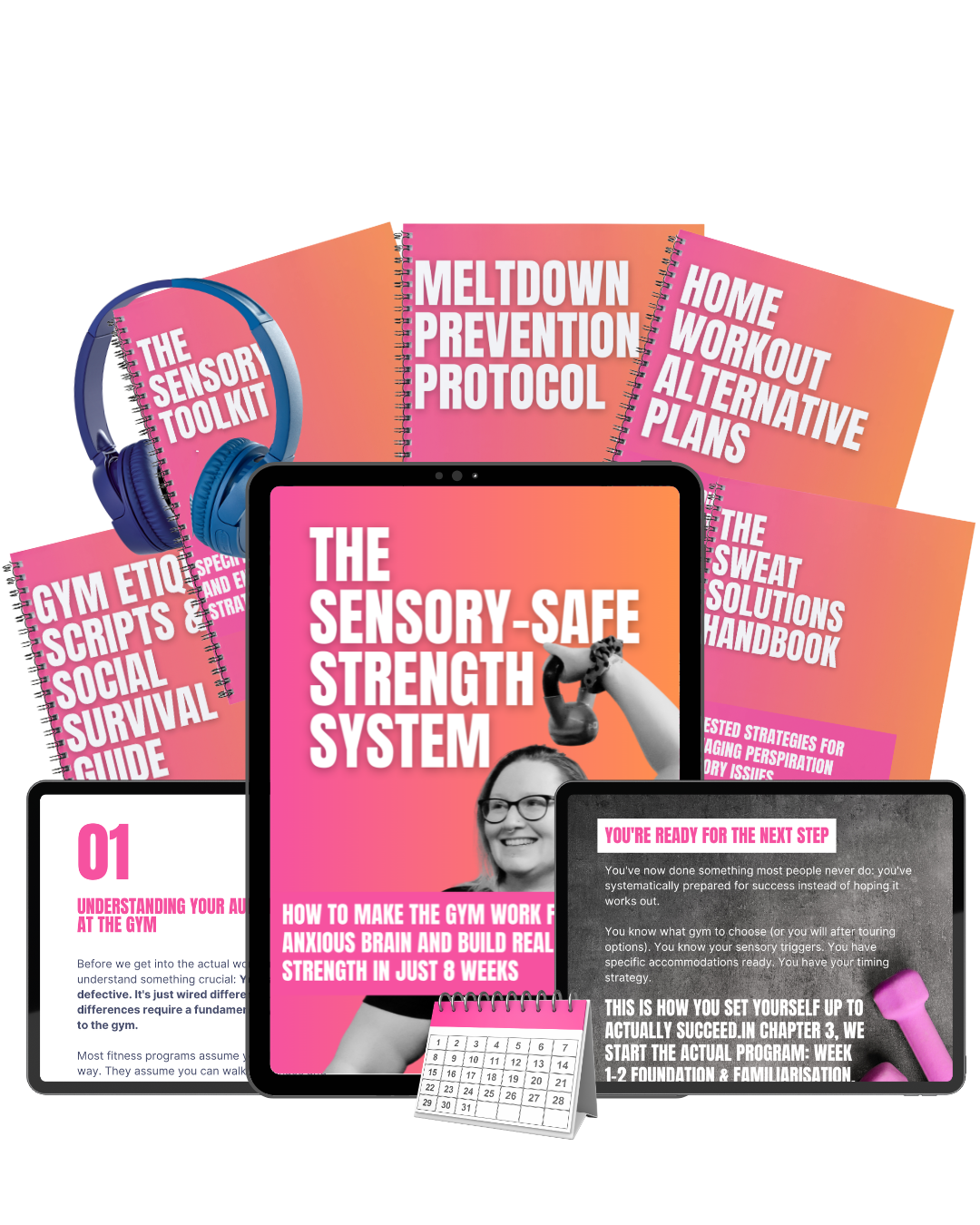
And if the gym environment is what overwhelms you; the noise, the crowds, not knowing where to start, the Sensory-Safe Strength System is built for exactly that.
Prefer a quieter session? Here's how to find the calmest times to train.
Now you know what reps and sets are, the next step is putting them into a structure that actually works for you.
If you're new to the gym altogether, the Beginner's Complete Gym Guide covers everything from your first visit to building a 4-week starter plan.
Frequently Asked Questions
What is a rep in exercise? A rep is one complete movement of an exercise; one squat, one push-up, one bicep curl.
What is a set in exercise? A set is a group of reps done back to back. If you do 10 squats in a row, that's one set of 10 reps.
How many reps should a beginner do? 8–12 reps per set is a good starting range for most beginners. It builds strength and muscle without overloading your body early on.
How many sets should a beginner do? Start with 2–3 sets per exercise. That's enough to get results without burning out or spending hours in the gym.
How long should I rest between sets? 60–90 seconds is a good default for beginners. For heavier strength work, rest up to 2–3 minutes. Use a timer so you're not guessing.
What does 3x10 mean in a workout? It means 3 sets of 10 reps; do the exercise 10 times, rest, repeat three times total.
