
How Gyms Can Improve Accessibility (And Why It Benefits Everyone)
Improving accessibility in gyms isn't just about meeting legal requirements or accommodating people with disabilities. When gyms prioritise inclusive design, they create welcoming environments where everyone; neurodivergent adults, people with gym anxiety, older adults, and beginners; can start their fitness journey and thrive.
Why Gym Accessibility Matters for Mental and Physical Health
Accessibility is about creating spaces where everyone can feel comfortable and empowered. This goes beyond physical adjustments like ramps or large-print signs; it involves thoughtful design that supports a variety of physical, mental, and sensory needs.
For neurodivergent people (those with autism, ADHD, or other cognitive differences), traditional gym environments can be overwhelming. Bright fluorescent lighting, loud music, crowded spaces, and unclear equipment instructions create barriers that have nothing to do with physical fitness; but everything to do with whether someone can actually use the space.
The best part? Accessibility features that support neurodivergent gym-goers actually enhance the experience for everyone. It’s called the ‘Curb Cut’ Effect.
Why I'm Qualified to Talk About Gym Accessibility
I'm Rhiannon Cooper, a CIMSPA-registered personal trainer with autism and ADHD. I've experienced gym environments from both sides, as someone who's had panic attacks in changing rooms and driven home in tears without going in, and as a fitness professional who now helps gyms become more neuroinclusive.
I know what it's like when fluorescent lights feel like they're drilling into your skull, when you can't process verbal instructions while music blares, when you need to know exactly what to expect or you can't walk through the door. I also know how life-changing it is when gyms get accessibility right.
Through Not So Typical Fitness, I provide accessibility audits for gyms and fitness facilities, assessing spaces from a neurodivergent user's perspective. I also work one-on-one with neurodivergent adults and people with gym anxiety, helping them build confidence in environments that finally work for their brains.
The accessibility recommendations in this guide aren't theoretical, they're based on lived experience and hundreds of conversations with neurodivergent gym-goers about what actually helps.
6 Practical Ways Gyms Can Improve Accessibility
1. Create Designated Quiet Spaces
Quiet spaces offer refuge when sensory input becomes overwhelming. These areas allow members to take a sensory break, recharge, and return to their workout with renewed focus.
What this looks like:
A dedicated corner with dimmer lighting
Seating away from high-traffic areas
Clear signage indicating it's a low-stimulation zone
Who benefits: People with sensory processing differences, those recovering from injuries, members with anxiety, anyone needing a moment between intense sets.
Learn more about sensory-friendly fitness approaches →
2. Add Clear Visual Equipment Instructions
QR codes, visual guides, or step-by-step instructional videos make equipment easier to use for everyone, not just people who struggle with verbal processing or working memory.
What this looks like:
QR codes on equipment linking to demonstration videos
Simple visual guides showing starting position and movement
Written instructions with numbered steps
Who benefits: Neurodivergent members who process visual information better than verbal instructions, gym beginners, people who prefer learning independently, members who don't speak English as a first language.
See our complete gym basics guide →
3. Offer Flexible Gym Inductions
Standard gym inductions are fast-paced, group tours with overwhelming amounts of information. This can exclude many potential members before they even start.
What flexible inductions include:
Slower-paced one-to-one sessions
Option to bring a support person
Written or video summaries members can review later
Silent or low-verbal tours for members who process information differently
Asking each member what accommodations they need
Who benefits: Neurodivergent adults, people with social anxiety, older adults returning to fitness, anyone who feels overwhelmed by traditional gym environments.
4. Implement Sensory-Friendly Design Elements
Small environmental changes make enormous differences in accessibility.
What this looks like:
Adjustable lighting options (not just harsh fluorescent)
Clearly marked quiet zones vs. high-energy areas
Proper ventilation
Equipment organisation that creates clear pathways
Visual markers (coloured tape/signage) to define different zones
Who benefits: People with sensory processing differences, those with visual impairments, members using mobility aids, anyone who finds crowded gyms overwhelming.
Complete guide to sensory-friendly fitness spaces →
5. Provide Clear Navigation and Clutter-Free Layouts
Organised, intuitive gym layouts benefit members with visual impairments or mobility aids, but also make the space more user-friendly for everyone.
What this looks like:
Logical equipment grouping (all cardio together, strength training areas clearly defined)
Wide, obstacle-free pathways
Consistent equipment placement
Clear signage with simple language
Who benefits: Members using wheelchairs or mobility aids, people with visual impairments, neurodivergent members who rely on routine, beginners navigating unfamiliar equipment.
6. Train Staff in Disability Awareness and Neurodivergent Communication
Even the most accessible physical space still fails if staff don't understand diverse needs.
What this includes:
Understanding different communication styles
Recognising signs of overwhelm or shutdown
Knowing when to offer help vs. giving space
Basic training on neurodivergence, mental health, and disability awareness
Who benefits: All members who interact with staff, especially those whose needs aren't immediately visible.
The Business Case for Gym Accessibility
Building Loyalty and Community
An accessible gym is an inclusive gym. When members feel supported and valued regardless of their needs, they stay longer and recommend your facility to others.
Diverse, welcoming spaces create richer social atmospheres and encourage mutual respect. Members who feel genuinely welcomed become your most loyal advocates.
Attracting Underserved Markets
15-20% of the population is neurodivergent. Many have abandoned gym memberships because traditional environments don't work for their brains. That's a massive untapped market.
Gyms that prioritise accessibility attract:
Older adults who need clear instructions and quieter spaces
Plus-size people who've experienced judgment in traditional gyms
Strengthening Your Brand Reputation
Gyms that prioritise accessibility send a powerful message: everyone is welcome here. This builds loyalty among existing members while attracting new ones seeking supportive, inclusive environments.
In a competitive market, accessibility sets you apart. Members who feel seen and valued become brand ambassadors.
Leading Industry-Wide Change
When your gym takes the lead in accessibility, you set a standard for others to follow. You become a role model, demonstrating that fitness spaces can, and should, cater to everyone.
Accessibility Isn't Optional Anymore
It's time to stop treating accessibility as an afterthought. It's a fundamental aspect of great gym design, one that fosters inclusion, community, and member well-being.
If you own or manage a gym and want to improve accessibility: I provide accessibility audits for gyms, hotels, and fitness facilities. I'll assess your space from a neurodivergent user's perspective and provide actionable recommendations.
Contact me about gym accessibility consulting today →
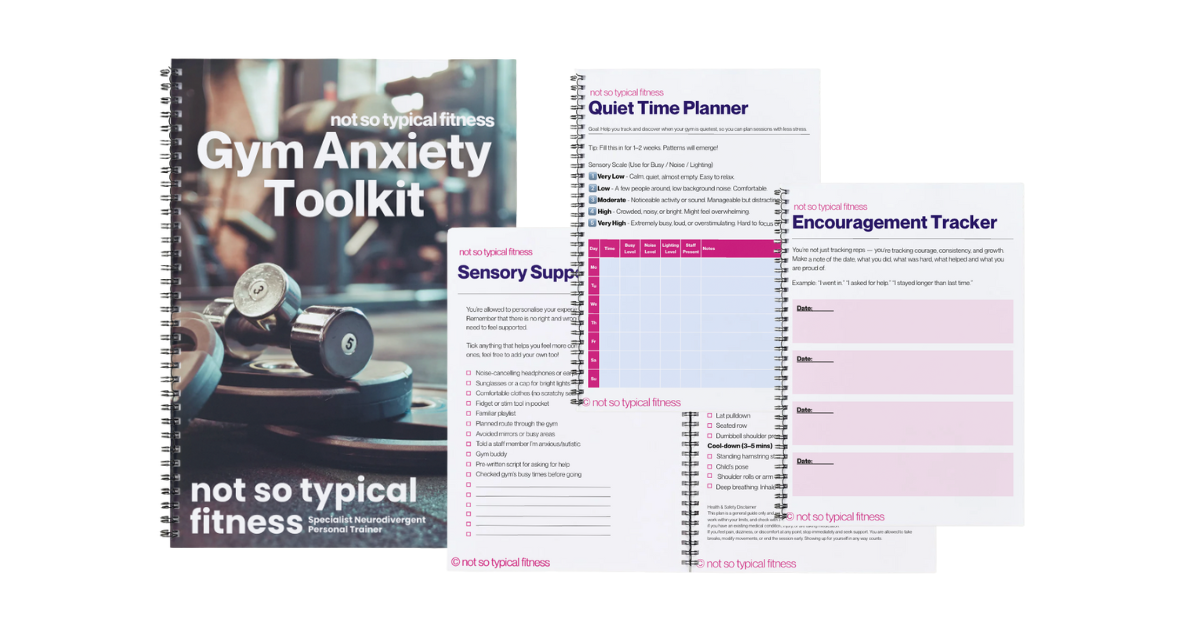
If you're neurodivergent and struggling with gym anxiety: You're not broken, and you don't need to force yourself into environments that don't work for your brain. I've created resources specifically for neurodivergent adults navigating fitness.
Frequently Asked Questions About Gym Accessibility
What does an accessible gym look like?
An accessible gym has clear visual instructions, flexible induction options, sensory-friendly design elements (adjustable lighting, quiet spaces), clutter-free layouts, and staff trained in neurodivergent communication styles.
How much does it cost to make a gym accessible?
Many accessibility improvements are low-cost or free (flexible inductions, staff training, better signage). Higher-cost changes like lighting adjustments or layout redesigns can be phased in over time. Most gyms find that accessibility improvements pay for themselves through increased member retention.
Do accessibility features only benefit disabled people?
No. Clear instructions help beginners. Quiet spaces benefit anyone with anxiety. Organised layouts improve everyone's experience. Sensory-friendly lighting reduces headaches. Accessible design makes gyms better for all members.
How can I tell if my gym needs accessibility improvements?
Ask yourself: Do new members struggle to use equipment without asking for help? Do you have members who only come during off-peak hours? Have you received feedback about overwhelming noise or lighting? Do staff know how to support members with non-visible disabilities? If you answered yes to any of these, accessibility improvements will help.
What's the first accessibility change a gym should make?
Start with staff training in neurodivergent communication and disability awareness. Your team is the face of your facility; if they understand diverse needs, they can support all members effectively. Then focus on clear visual instructions for equipment and flexible induction options.
Can small gyms implement accessibility features too?
Absolutely. Many accessibility improvements don't require large budgets or extensive renovations. Adding QR codes to equipment, training staff, offering flexible inductions, and creating one quiet corner are all achievable for gyms of any size.
